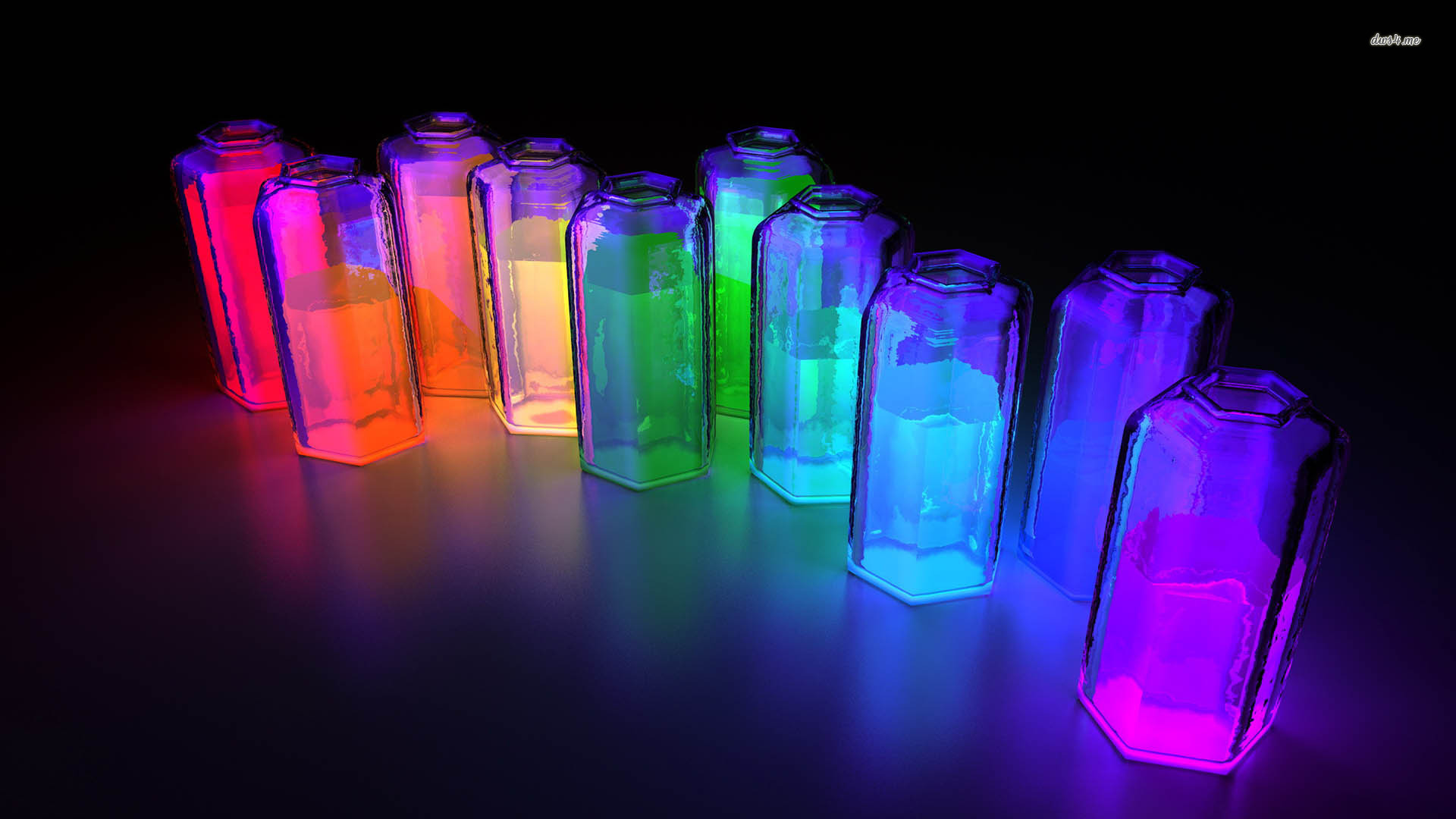
Fluorescence, emission of electromagnetic radiation, usually visible light, caused by excitation of atoms in a material, which then reemit almost immediately (within about 10−8 seconds). The initial excitation is usually caused by absorption of energy from incident radiation or particles, such as X-rays or electrons. Because reemission occurs so quickly, the fluorescence ceases as soon as the exciting source is removed, unlike phosphorescence, which persists as an afterglow. A fluorescent lightbulb is coated on the inside with a powder and contains a gas; electricity causes the gas to emit ultraviolet radiation, which then stimulates the tube coating to emit light.
Fluorescence has many practical applications, including mineralogy, gemology, medicine, chemical sensors (fluorescence spectroscopy), fluorescent labelling, dyes, biological detectors, cosmic-ray detection, and, most commonly, fluorescent lamps. Fluorescence also occurs frequently in nature in some minerals and in various biological states in many branches of the animal kingdom.
Are fluorescent lights dangerous?
Mercury is essential to a fluorescent bulb's ability to emit light; no other element has proved as efficient. As effective as it is at enabling white light, however, mercury—sometimes called quicksilver—is also highly toxic.
Do fluorescent lights cause cancer?
Compact fluorescent lamps and risk of skin cancer. ... RESULTS: On average, the UV radiation from CFLs and subsequent carcinogenic exposure is lower than that from incandescent bulbs. However, defective bulbs can emit higher levels of UV radiation, which may cause significant damage.
What are the side effects of fluorescent lights?
- Intolerance of fluorescents.
- Eye strain.
- Eye pain or inflammation.
- Blurred or impaired vision.
- Difficulty reading or focusing.
- Headache or migraine attacks.
- Vertigo or dizziness.
- Lightheadedness.

How does fluorescence work?
When you turn on a fluorescent tube, the starter is a closed switch. The filaments at the ends of the tube are heated by electricity, and they create a cloud of electrons inside the tube. ... When it opens, the voltage across the tube allows a stream of electrons to flow across the tube and ionize the mercury vapor.
Comments
Post a Comment